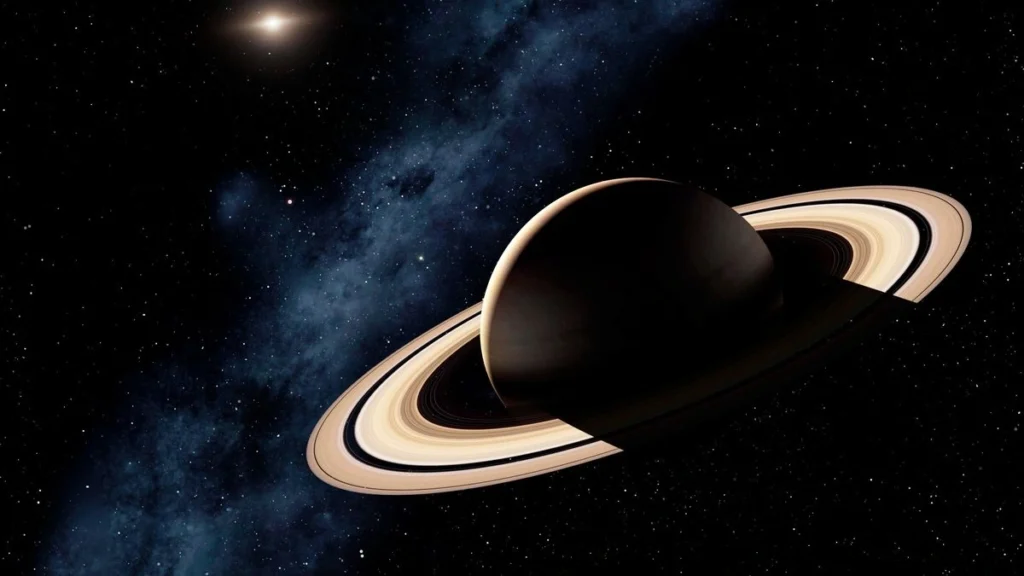

Okay, space nerds (like myself!), get ready to mark your calendars. November is bringing us something seriously cool – a chance to see Saturn apparently ringless ! But before you start imagining some cosmic catastrophe, let’s be clear: Saturn’s rings aren’t vanishing. It’s all about perspective, baby! As someone who’s spent countless nights gazing at the cosmos (mostly through a slightly-too-small telescope), I can tell you this is one celestial event you don’t want to miss.
Here’s the thing: what’s going on, why is it happening, and how can you witness this cool event from India?
Why Saturn Appears Ringless
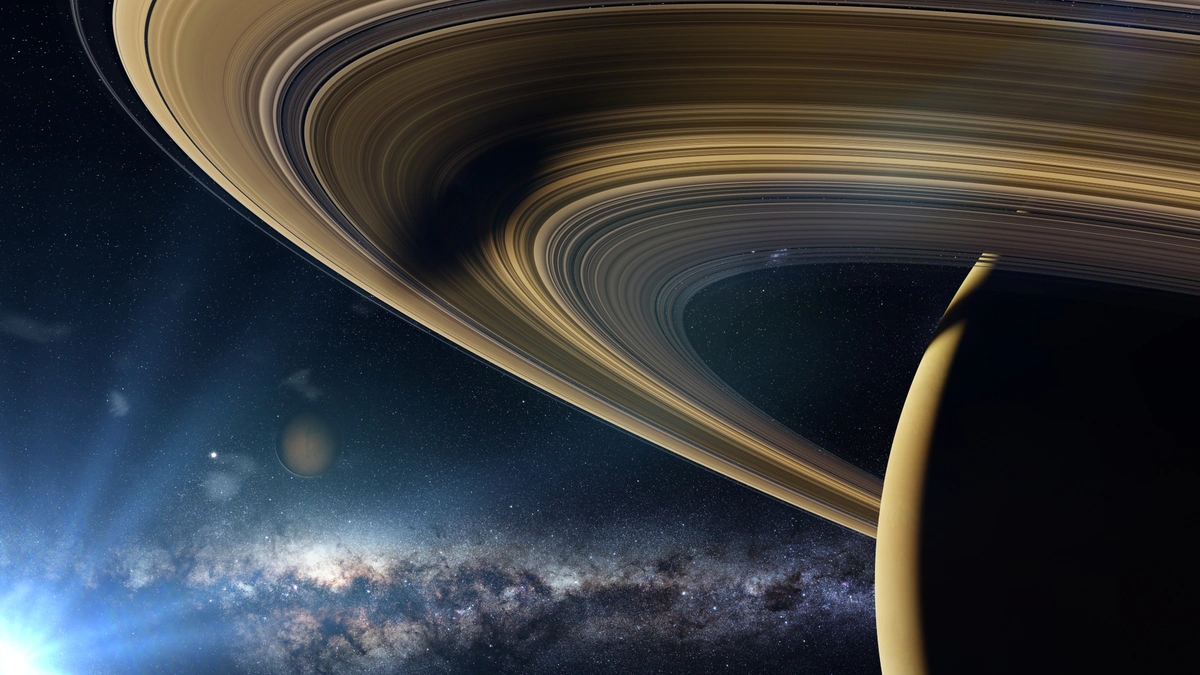
Let’s dive into the astrophysics (don’t worry, I’ll keep it simple!). Saturn’s rings aren’t just one solid disc; they’re made up of billions of icy particles, ranging from tiny grains of dust to chunks the size of houses. These particles orbit Saturn like millions of miniature moons. Because of Saturn’s tilt (around 27 degrees), we view the rings at different angles as it orbits the sun. Sometimes we see them wide open, blazing like a celestial hula hoop. Other times – like this November – we see them nearly edge-on.
When the Earth passes through Saturn’s ring plane, or gets close to it, the rings appear to almost disappear. Why? Because they’re incredibly thin! Even though they stretch hundreds of thousands of kilometers across, they’re only about 10 meters thick, on average. Imagine trying to spot the edge of a sheet of paper from kilometers away. This is exactly what’s happening. So, when we look at Saturn edge-on, the rings become incredibly faint, creating the illusion that Saturn is ringless. This phenomenon is not new; the last time it happened was in 2009, and it will happen again in 2038. This event, according to the experts atNASA, offers a unique opportunity to study Saturn itself without the rings’ glare.
The Science Behind the Disappearing Rings
The alignment of Saturn, Earth, and the Sun is key to this phenomenon. This alignment doesn’t happen every year because Saturn has a long orbital period. It takes about 29.5 Earth years for Saturn to make one complete orbit around the Sun. This means the ring plane alignment, where the rings appear edge-on, happens roughly every 13.75 to 15.75 years. But, here’s what fascinates me: these events aren’t precisely symmetrical. Sometimes, Earth passes through the ring plane multiple times during a single alignment period due to our own orbital motion. This can lead to a series of apparent ring disappearances over a few months!
Furthermore, the exact date and time of the ring plane crossing depend on your location on Earth. The view changes slightly based on your position. Ring plane crossing is a term that astronomers use to describe this specific alignment. It is critical to understand the geometry in order to properly observe and appreciate the view. In addition, studying the light that passes through the rings during these alignments helps astronomers learn more about their composition and structure. It’s like using the rings as a giant, albeit faint, spectroscope.
How to Observe Saturn from India
Okay, so you’re itching to see this ringless Saturn . How do you do it from India? Here’s the breakdown:
- Timing is key: The best time to view this phenomenon is in November. Keep an eye on astronomy websites and apps for the exact dates and times of the ring plane crossing visible from your location. For specific times, consult resources like Time and Date.
- Location, location, location: Get as far away from city lights as possible. Light pollution will make it harder to see the faint Saturn. The darker your sky, the better.
- Binoculars or Telescope: While you might be able to spot Saturn as a bright point of light with the naked eye, you’ll need at least a pair of binoculars to get a decent view. A small telescope will give you the best experience.
- Astronomy Apps: Download a stargazing app like SkyView Lite or Stellarium. These apps can show you exactly where Saturn is in the sky at any given time and help you identify it among the stars.
Let me rephrase that for clarity: even if you don’t have fancy equipment, don’t be discouraged! The thrill of finding Saturn in the night sky is amazing. Plus, even a small telescope will provide a unique view. A common mistake I see people make is not allowing their eyes to adjust to the darkness. Give yourself at least 20-30 minutes in the dark for your eyes to fully adapt, and you’ll be amazed at how much more you can see.
But, remember that seeing conditionscan vary depending on the weather. Clear skies are obviously essential! Check the weather forecast beforehand, and be prepared to be patient. Astronomy often requires a bit of persistence.
Beyond the Ringless View | What Else to Look For
Even though the disappearing rings are the main attraction, Saturn itself is a fascinating planet to observe. Look closely, and you might be able to make out some of its faint cloud bands. With a larger telescope, you might even spot Titan, Saturn’s largest moon, appearing as a tiny point of light near the planet. Titan is truly special because it is the only moon in our solar system that has a dense atmosphere and liquid oceans.
What fascinates me is that observing Saturn and its moons gives you a real sense of the scale of our solar system. It’s not just a planet in space; it’s a whole system, with its own gravitational dance. This phenomenon is similar to another cosmic event, the supermoon , where the moon appears significantly larger and brighter due to its proximity to Earth.
The Broader Significance
Why does all this even matter? Well, besides being incredibly cool to witness, these events provide valuable data for scientists. The slight changes in light and shadow during the ring plane crossing allow astronomers to refine their models of the rings’ structure and composition. This helps us understand the origin and evolution of these iconic features. What I initially thought was straightforward quickly became much more interesting once I began to look at the implications.
Furthermore, observing Saturn encourages people to look up and engage with the universe. It sparks curiosity and inspires questions. It reminds us that we are part of something much larger than ourselves. And, let’s be honest, in a world filled with screens and distractions, a little bit of stargazing can be a welcome escape. Remember to stay curious and keep exploring!
FAQ About Saturn’s Ring Plane Crossing
Will Saturn completely disappear?
No, Saturn itself will still be visible as a bright planet. It’s only the rings that will appear to vanish.
Do I need a telescope to see this?
While a telescope is ideal, you can see Saturn (as a bright dot) with the naked eye, and the effect of the disappearing rings may be noticeable with binoculars.
When is the next time this will happen?
The next major ring plane crossing will occur in 2038.
What if the weather is bad on the night of the event?
Unfortunately, you’ll have to wait for the next opportunity. Check for other visible nights close to the peak date, and hope for clearer skies!
Are there any risks to looking at Saturn?
No, observing Saturn is perfectly safe. You don’t need any special filters or precautions.
Can I take pictures of it with my phone?
It’s challenging, but possible! Try using a phone camera adapter for a telescope or binoculars. Steady your phone and experiment with different settings.


Leave feedback about this