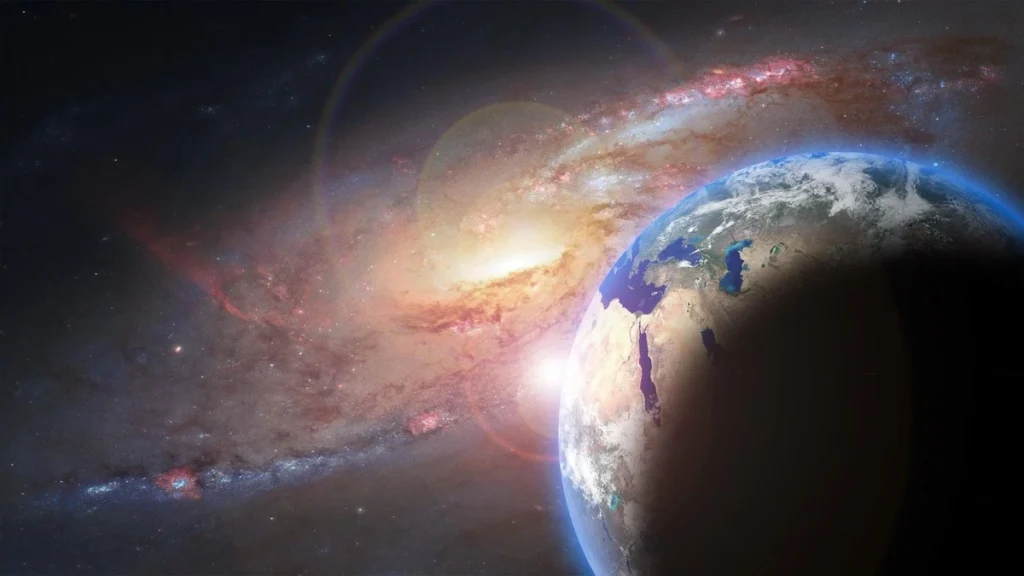

The Moon. That celestial pearl in our night sky. We see it, we admire it, we even sing about it. But have you ever stopped to wonder where it really came from? The prevailing scientific theory points to a cataclysmic collision between Earth and a Mars-sized protoplanet named Theia . But here’s the thing: the story gets more intriguing when you start asking where exactly Theia was hanging out before it decided to crash the party. Was Theia near Earth ? And what implications did Theia’s location have?
It’s not just about cosmic history; it’s about understanding our place in the universe. So, grab your chai, and let’s dive into the mind-bending world of planetary formation and collisional accretion . And trust me, this is more than just astrophysics – it’s a story of near misses, colossal impacts, and the surprisingly delicate dance that led to the world we know today.
The Giant-Impact Hypothesis | A Cosmic Wrecking Ball
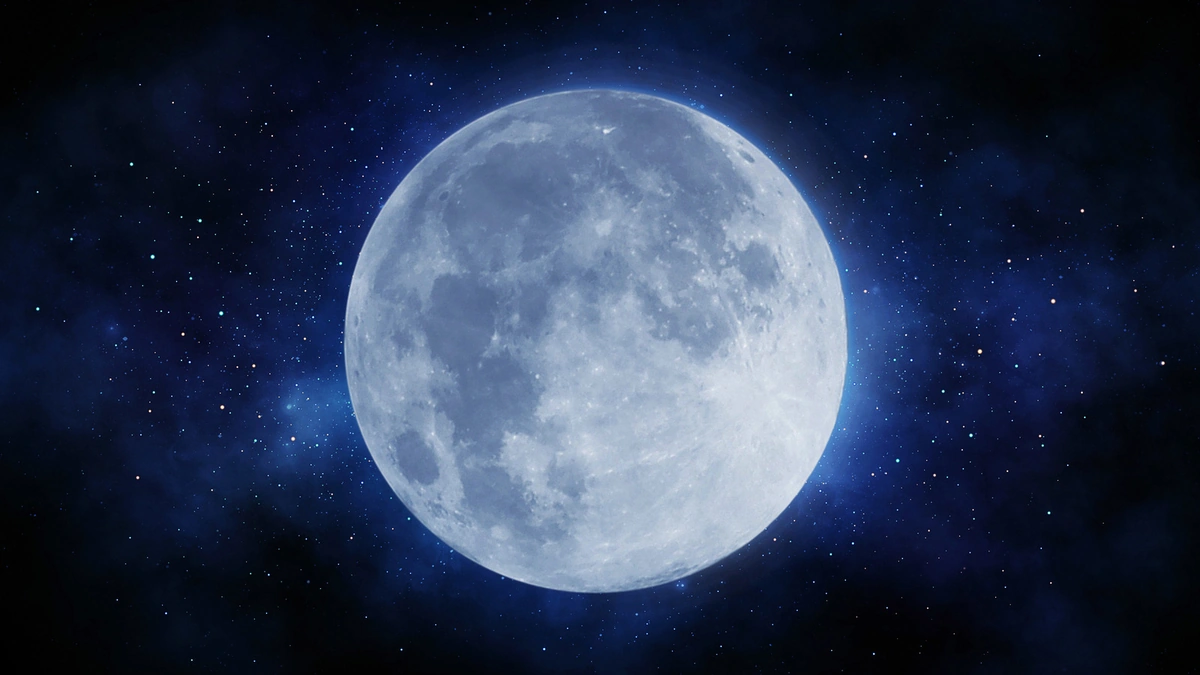
Okay, let’s start with the basics. The Giant-Impact Hypothesis is the leading explanation for the Moon’s origin. It suggests that early Earth, roughly 4.5 billion years ago, wasn’t the serene blue marble we see today. Instead, it was struck by a massive object – Theia . This wasn’t a gentle nudge; it was a full-on cosmic collision, a planetary fender-bender of epic proportions.
Here’s the thing that always gets me: the sheer scale of this event. We’re talking about objects the size of planets smashing into each other! The impact would have vaporized vast amounts of rock and debris, sending it hurtling into space. This cloud of debris, through the magic of gravity and orbital dynamics , eventually coalesced to form what we now call the Moon. Isn’t space wild?
But where was Theia lurking before this celestial demolition derby?
Was Theia a Trojan? The L4 and L5 Lagrange Points
Now, this is where it gets really interesting. The most recent research, and this is where the question of ” Was Theia near Earth ?” becomes incredibly pertinent, suggests that Theia may have been a Trojan object. No, we’re not talking about wooden horses and Greek soldiers. In astronomical terms, Trojan objects share an orbit with a larger planet, residing in stable gravitational pockets called Lagrange points.
Specifically, Theia might have chilled in either the L4 or L5 Lagrange point of Earth’s orbit. These points, located 60 degrees ahead and behind Earth in its orbit around the Sun, are like cosmic parking spots where gravitational forces balance out. An object placed at a Lagrange point tends to stay there, held in place by the combined gravitational pull of the Sun and Earth.
So, imagine Theia , a planetary body almost the size of Mars, merrily orbiting the Sun alongside Earth, albeit at a safe distance. Sounds almost peaceful, right? Well, not for long. The reality is that these Lagrange points aren’t perfectly stable over billions of years. Minor gravitational perturbations from other planets, or even internal shifts within Theia itself, could have nudged it out of its stable location.
And that nudge? That was all it took. The slow, inexorable drift towards a catastrophic encounter with our planet. The implications of Theia’s location are massive in understanding the moon-forming disk .
The Implications of Theia’s Origin | A Habitable Planet?
So, why does it matter where Theia came from? What’s the big deal about Lagrange points and planetary collisions ? Here’s the thing: understanding Theia’s origin sheds light on the conditions that allowed Earth to become the habitable planet we know and love.
If Theia formed in the same region of space as Earth, it likely had a similar composition. This would explain why the Moon is so chemically similar to Earth’s mantle. On the other hand, if Theia originated from a more distant part of the solar system, it would have brought different materials to the table, potentially influencing Earth’s early atmosphere and geological makeup. This would be relevant to planetary science .
Here’s the fascinating part: some scientists believe that the impact with Theia might have been crucial for delivering water and other volatile compounds to Earth. These elements, essential for life as we know it, might have been scarce on early Earth. Theia , therefore, could have been the cosmic delivery service that stocked our planet with the ingredients for life.
Furthermore, the Giant-Impact Hypothesis helps explain Earth’s unusually large moon. Compared to other planets in our solar system, Earth has a relatively massive satellite. This large moon has a stabilizing effect on Earth’s axial tilt, preventing extreme climate variations over long timescales. Without the Moon, Earth might have experienced wild swings in temperature, making it far less hospitable to life. Talk about luck.
Unanswered Questions and Future Research
Of course, the story of Theia is far from being completely solved. There are still many unanswered questions and ongoing debates among scientists. For instance, some researchers propose that Theia might have had a different origin altogether, perhaps forming much further out in the solar system and migrating inwards. Others are exploring alternative scenarios for the Moon’s formation, such as multiple smaller impacts instead of one giant collision.
Future missions to the Moon, particularly those focused on analyzing lunar samples from different locations, will be crucial for testing these hypotheses. By studying the Moon’s composition in greater detail, scientists hope to gain a clearer picture of Theia’s origin and the nature of the impact. The more we learn, the better we can unravel the mysteries of our solar system’s past and understand the processes that shaped our planet. Understanding the collisional event can teach us so much.
Let’s be honest. The story of Theia is a cosmic detective story. We’re piecing together clues from billions of years ago to understand a pivotal moment in Earth’s history. It’s a testament to the power of human curiosity and our relentless drive to explore the universe and our origins. The more we study the Earth-Moon system , the more we will understand.
FAQ About Theia and the Moon’s Formation
What is the Giant-Impact Hypothesis?
It’s the leading scientific explanation for the Moon’s formation, suggesting that Earth collided with a Mars-sized object named Theia early in its history.
Where was Theia before the impact?
Recent research suggests Theia may have been a Trojan object, orbiting the Sun in either the L4 or L5 Lagrange point of Earth’s orbit.
Why is Theia’s origin important?
Understanding Theia’s origin helps us understand the conditions that allowed Earth to become habitable and the source of water and other vital elements.
Could there be other theories about the Moon’s formation?
Yes, scientists are exploring alternative scenarios, such as multiple smaller impacts or a different origin for Theia .
How can future missions help?
Analyzing lunar samples from different locations can provide crucial clues about Theia’s composition and the nature of the impact. The study of the lunar samples is essential.
Is Theia still out there?
No. Theia no longer exists as a separate planetary body. Its remnants are believed to have merged with Earth and formed the Moon during the giant impact.


Leave feedback about this