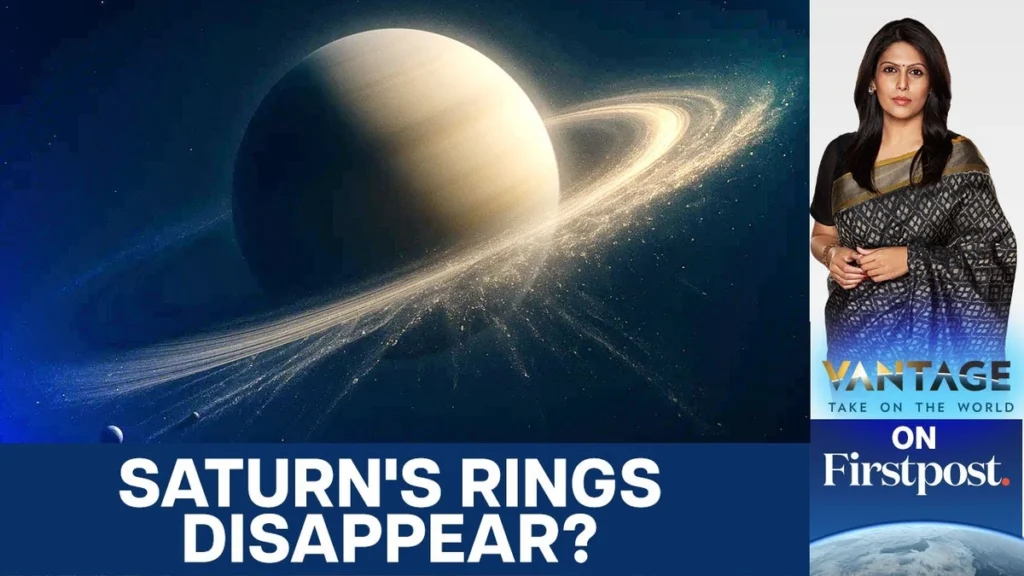

Saturn. Just the name conjures images of a majestic, golden orb encircled by shimmering rings. It’s an icon of our solar system, a celestial beauty that has captivated stargazers for centuries. But what if I told you that this iconic view might not be permanent? What if, one day, those glorious Saturn’s rings just… vanished? That’s the question that’s been buzzing around the scientific community, and honestly, it’s a bit unsettling. We have to ask: are Saturn’s rings disappearing?
Here’s the thing: those rings, seemingly eternal, are actually surprisingly dynamic. They’re not solid structures, but rather countless icy particles, ranging in size from tiny grains of dust to massive chunks several meters across. These particles are constantly colliding, interacting, and being influenced by Saturn’s gravity and magnetic field. And it turns out, this constant activity is slowly, but surely, leading to their demise.
The Ring Rain Phenomenon | Saturn’s rings may be disappearing
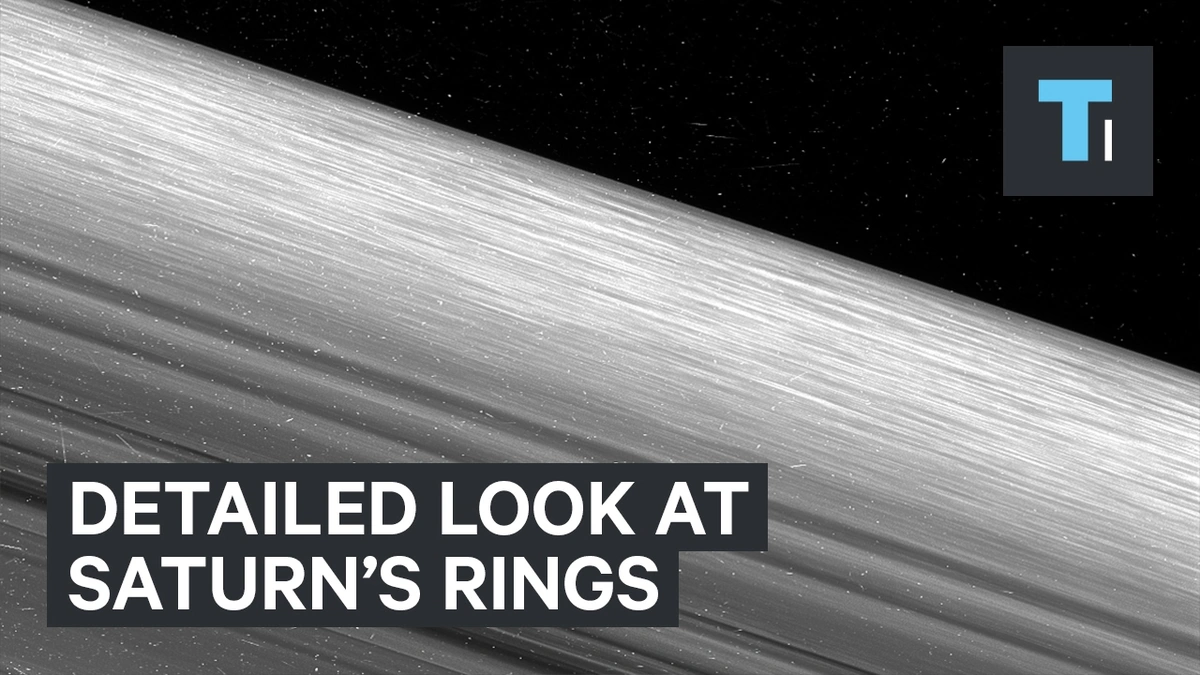
So, how exactly are Saturn’s rings disappearing? Well, the culprit is something called “ring rain.” Essentially, Saturn is pulling the ring particles towards itself. It sounds like something out of a science fiction movie, right? Let me break it down. Due to a complex interplay of gravity and electromagnetic forces, these icy particles are being pulled out of the rings and drawn down into Saturn’s atmosphere. This process isn’t uniform across the rings; some parts are losing material faster than others. This creates a kind of “rain” of icy particles falling onto the planet. According to NASA, the rings could be gone in 100 million years. Interesting stuff!
Now, 100 million years might sound like a long time, especially given the vast timescale of the universe. But in astronomical terms, it’s a blink of an eye! What fascinates me is that we’re living in a special time, a cosmic moment where we get to witness this phenomenon firsthand. Future civilizations might only see Saturn as a ringless planet, an entirely different sight.
Why Are Saturn’s Rings Disappearing? Unpacking the ‘Why’
This is where it gets really interesting. The rate at which the rings are disappearing is far faster than scientists initially anticipated. Early estimates suggested the rings might last for billions of years. But recent data from the Cassini spacecraft, which spent 13 years orbiting Saturn, revealed that the ring rain is far more intense than previously thought. Some studies even suggest that the rings could be gone in as little as 100 million years! Ring composition and its effect on the planet is fascinating. This accelerated rate of loss has led scientists to rethink their understanding of the rings’ origin and lifespan. It has become a significant area of study.
One key factor driving the ring rain is the planet’s magnetic field. Saturn’s magnetic field interacts with the icy particles, ionizing them and giving them an electrical charge. This charge makes them susceptible to Saturn’s gravity, pulling them along magnetic field lines towards the planet’s poles. The magnetic field and its influence is truly fascinating. The angle of the rings also plays a huge role.
What Does This Mean for the Future of Saturn?
Okay, so the rings are disappearing. But what does that actually mean? Besides the obvious loss of a beautiful celestial feature, the disappearance of the rings could have subtle but important effects on Saturn’s atmosphere and potentially its moons. The influx of water from the ring rain could alter the chemical composition of Saturn’s upper atmosphere, impacting its weather patterns and temperature. The relationship between Saturn and its moons is crucial. Additionally, the rings play a role in shielding Saturn’s moons from micrometeoroid impacts. Without the rings, these moons might be more vulnerable to collisions.
But, and this is a big but, the loss of the rings also raises some profound questions about the rings’ origin. If they’re disappearing so quickly, it suggests they might be relatively young, perhaps only a few hundred million years old. This challenges the traditional view that the rings formed along with Saturn itself, billions of years ago. So, what created the rings in the first place? This is an important piece of the puzzle to solve.
Theories on the Origin of Saturn’s Rings and Saturn’s inner moons
This is where things get speculative, but in a good way! There are a few leading theories about the origin of Saturn’s ring system . One popular idea is that the rings are the remnants of a shattered moon or cometary object. Imagine a large icy body venturing too close to Saturn, torn apart by the planet’s immense gravitational forces. The debris from this catastrophic event could have then spread out to form the rings we see today. This theory is supported by the fact that the rings are primarily composed of ice, similar to the composition of many moons and comets. What I find amazing is how much we can learn from studying the particles found within the rings.
Another theory suggests that the rings are continuously replenished by material ejected from Saturn’s moons. Some of Saturn’s inner moons, like Enceladus, are known to have cryovolcanoes that spew out plumes of water ice and gas. This material could contribute to the rings, helping to offset the loss from ring rain. However, it’s unlikely that this process alone can fully explain the rings’ current mass and rate of decline.
What Can We Learn from the Disappearing Rings?
Studying the disappearance of the rings isn’t just about mourning the loss of a beautiful sight. It’s about gaining a deeper understanding of the processes that shape planetary systems. By analyzing the composition and dynamics of the rings, scientists can learn about the conditions in the early solar system, the formation of planets, and the interactions between planets and their moons. This is a field where so much is yet to be discovered. Also, let’s not forget the importance of the Cassini mission.
For instance, the fact that the rings are disappearing so quickly suggests that ring systems around other planets might also be ephemeral. This could have implications for our understanding of the frequency and distribution of ringed planets in the universe. Moreover, the study of ring rain can provide insights into the processes that control the transport of material within planetary atmospheres, which is relevant to understanding climate change on Earth. The rate of disappearance is an important data point. It could teach us so much. The rings provide clues to the formation and evolution of Saturn itself.
So, while the thought of Saturn losing its rings might be a bit sad, it’s also an opportunity. An opportunity to learn, to explore, and to expand our understanding of the cosmos. And who knows, maybe future scientists will find a way to replenish the rings, ensuring that Saturn remains a celestial spectacle for generations to come. It is important to analyze its longevity.
FAQ about Saturn’s Rings
Will Saturn always have rings?
No, current scientific evidence suggests that Saturn’s rings are disappearing faster than previously thought and could be gone in approximately 100 million years.
What are Saturn’s rings made of?
Saturn’s rings are primarily composed of countless icy particles, ranging in size from tiny grains of dust to larger chunks several meters across. There is also trace amounts of rock.
How did Saturn get its rings?
The origin of Saturn’s rings is still debated, but one leading theory is that they are the remnants of a shattered moon or cometary object that ventured too close to Saturn.
Is there any way to save the rings?
While there’s no known way to prevent the natural processes causing the rings to disappear, future technologies might potentially find ways to replenish the rings, though this is highly speculative.
Are Saturn’s rings unique in the solar system?
While other planets like Jupiter, Uranus, and Neptune also have rings, Saturn’s rings are by far the most prominent and extensive in the solar system.


Leave feedback about this